Looking at Catherineberg on St. Thomas and wondering what it is really like to buy there? This is one of those areas where a quick map search does not tell the whole story. If you want a clear picture of location, property style, convenience, and the due diligence that matters most on a hillside purchase, this overview will help you sort the opportunity from the practical details. Let’s dive in.
Where Catherineberg sits on St. Thomas
Catherineberg on St. Thomas is part of the Charlotte Amalie and Denmark Hill hillside area, not a separate island community. It sits within the older residential hill fabric north of Charlotte Amalie’s main business district, which gives it a more tucked-away feel than you might expect from a capital-city address.
It is also important not to confuse this area with Catherineberg on St. John. On St. Thomas, Catherineberg is tied to the historic core of Charlotte Amalie, and the historic-district boundary reaches Cathrineberg Road. For you as a buyer, that means the setting is shaped by both hillside topography and historic context.
What the area feels like
Catherineberg reads more like a hillside estate pocket than a flat in-town subdivision. The area is associated with elevation, views, and older hillside construction patterns, which often create a sense of separation from the busier commercial core below.
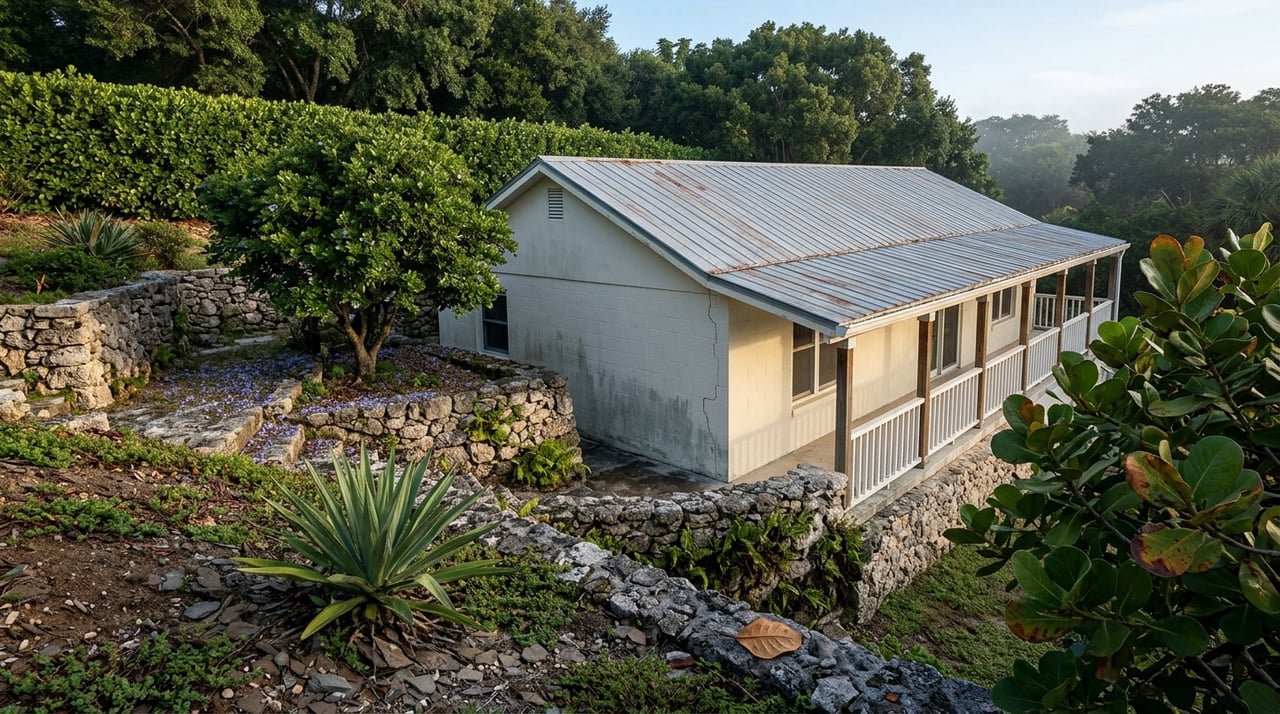
Because the land sits on the slopes of Denmark Hill, homes here often reflect vertical design and site-specific layouts. You may find larger lots, more privacy, and architecture that works with the terrain rather than trying to flatten it.
What buyers are likely to find
Inventory in Catherineberg appears to be limited and highly specific. A May 2026 Charlotte Amalie market snapshot showed a median listing price of $1.7 million, 54 active listings, and 92 days on market, while the Catherineberg street page reflected just one valid address, 2211 Catherineberg St Thomas VI 00802, listed as off market.
That does not mean every nearby property will fit the same profile. It does suggest, though, that Catherineberg is best understood as a low-turnover niche area rather than a neighborhood with broad, consistent inventory.
Common property traits
Buyers often focus on a few defining features in Catherineberg:
- Elevated sites
- Broad hillside or harbor-oriented views
- Older masonry construction patterns
- Two-story layouts that respond to slope
- Larger lots compared with denser in-town settings
- More privacy, but often more site complexity
Those traits can be appealing if you want a home with character, views, and a more estate-like setting. They also make property-by-property review especially important.
Convenience versus privacy
One of Catherineberg’s main appeals is balance. St. Thomas is a mountainous island with views in many directions, and Charlotte Amalie remains the island’s main harbor city with access to shopping, ferry connections, historic sites, and other everyday conveniences.
Catherineberg can be framed as close enough to downtown amenities to stay practical while still feeling removed from the busiest parts of town. If you want both access and a little breathing room, that tradeoff may be exactly what draws you here.
Why slope matters so much
On St. Thomas, topography is not a side note. A University of the Virgin Islands watershed study describes the island as fairly hilly and notes that more than 70% of the land surface has slopes exceeding 35 degrees.
For you as a buyer, that makes hillside due diligence essential. A beautiful view lot can come with real questions about access, drainage, erosion, and long-term maintenance.
Key hillside checks
Before you move forward on a Catherineberg property, pay close attention to:
- Driveway grade and turning radius
- Retaining walls and visible signs of movement
- Drainage paths around the house and lot
- Erosion control measures
- Site access for service vehicles and future work
- The practical usability of outdoor areas
In hillside markets, these details can shape both daily convenience and future costs. They are worth reviewing early, not after inspections are underway.
Water and wastewater questions to ask
Water systems deserve careful attention in the Virgin Islands. The Caribbean Green Technology Center reports that more than 90% of the population uses rainwater harvesting, and building codes require cisterns when a home is not connected to public water.
St. Thomas also has desalination plants and a public water distribution system in some parts of the territory, but service setup can vary by property. That is why buyers should verify exactly how a specific home handles water supply and storage.
Your water checklist
Ask for clear information on:
- Cistern capacity
- Pump condition
- Overflow handling
- Filtration or treatment equipment
- Whether the property is connected to public water
- Maintenance and service history
Wastewater matters just as much. The same UVI study notes that St. Thomas soils are often thin clay loam over rock, which can create rapid runoff and make subsurface sewage disposal more challenging.
Your wastewater checklist
Make sure you review:
- Septic permits
- Septic location and accessibility
- Service records
- Any known repairs or upgrades
- Site conditions that may affect long-term performance
These are not small details in a hillside market. They are core parts of understanding how the property functions.
Historic review and permitting
If you are thinking about renovations, additions, or a future rebuild, permitting deserves early attention. The Division of Permits within DPNR handles plan review, inspections, floodplain management, and code enforcement, and it lists code references including IRC 2021, IBC 2021, UPC 2021, and NEC 2020.
The historic layer matters too. Because the Charlotte Amalie historic-district boundary reaches Cathrineberg Road, some parcels or exterior projects may require additional historic-review clearance before permits can move forward.
Why this affects your buying strategy
This does not mean improvement plans are impossible. It does mean you should confirm, before closing if possible, whether your intended work could trigger added review, timeline changes, or design constraints.
For buyers considering a value-add purchase, this step can be just as important as the inspection itself. It helps you judge not just what a property is today, but what it can realistically become.
Renovation or new build?
Catherineberg can appeal to both renovation-minded buyers and those thinking about a fresh start on a hillside parcel. The district history points to older masonry residences, while surrounding slopes also include newer two-story masonry homes on larger lots.
In practice, the decision often comes down to access, lot constraints, permitability, and review requirements. A charming older structure may offer location and character, while a new build may offer a cleaner long-term plan if the site supports it.
Compare both paths carefully
If you are weighing renovation against new construction, consider:
- Structural condition of the existing home
- Ease of bringing systems up to current standards
- Site access for materials and crews
- Historic-review considerations
- Grading and drainage needs
- The time and complexity of the permit path
This is where grounded island guidance can make a big difference. On a steep site, the simplest-looking option is not always the easiest or the most cost-effective.
Is Catherineberg right for you?
Catherineberg may be a strong fit if you want a hillside setting with views, privacy, and proximity to Charlotte Amalie. It is especially worth a look if you are comfortable with a market where each property can have its own access, infrastructure, and improvement considerations.
If you prefer plug-and-play inventory with more uniform lots and simpler site conditions, this area may feel more complex. But if you value character, elevation, and a more tucked-away setting near the capital, Catherineberg can be a compelling place to focus your search.
Buying in the Virgin Islands often comes down to understanding what is beautiful and what is practical at the same time. If you want help evaluating hillside access, utilities, buildability, or the tradeoffs between privacy and convenience, Tropical Properties VI brings the kind of candid local guidance that helps you make a smarter decision.
FAQs
Where is Catherineberg on St. Thomas?
- Catherineberg on St. Thomas is in the Charlotte Amalie and Denmark Hill hillside area, north of the main business district, and within the historic core tied to Cathrineberg Road.
What types of homes are common in Catherineberg on St. Thomas?
- Buyers are likely to find hillside homes with masonry construction patterns, vertical layouts, larger lots, and view-oriented settings shaped by the slope.
Is Catherineberg on St. Thomas the same as Catherineberg on St. John?
- No. Catherineberg on St. Thomas is part of the Charlotte Amalie hillside area, while Catherineberg on St. John refers to a different location associated with the historic sugar plantation area.
What should buyers inspect first in Catherineberg on St. Thomas?
- The most important early checks usually include driveway access, drainage, retaining walls, erosion control, cistern systems, septic details, and any permit or historic-review considerations.
Does buying in Catherineberg on St. Thomas require special permit research?
- It can, especially if you plan exterior changes or major improvements, because some properties may fall within an area where historic-review clearance is relevant in addition to standard permitting.
Is Catherineberg on St. Thomas convenient to Charlotte Amalie amenities?
- Yes, the area can offer a useful balance of hillside privacy and access to downtown Charlotte Amalie, including shopping, harbor activity, ferry connections, and other nearby destinations.