By Tropical Properties VI
Furnishing a home on St. John is an exercise in working with the island rather than against it. Tropical heat, consistent humidity, Caribbean salt air, and hurricane season mean that furniture choices that work on the mainland will often fail here within a few years.
These furniture tips for St. John USVI homes are the foundation of that conversation.
Key Takeaways
- Material selection is everything: In St. John's coastal environment, the wrong materials (untreated iron, soft woods, natural wicker) will rust, warp, or disintegrate quickly.
- Outdoor spaces deserve the same investment as indoor ones: St. John's terraces and covered lanais are genuinely lived-in spaces, and the furniture there should be chosen with the same care as anything inside.
- Upholstery and fabric choices carry the same stakes as frame materials: Salt air and humidity attack cushions and fabric as readily as they attack metal and wood, making performance fabrics a practical necessity rather than a luxury upgrade.
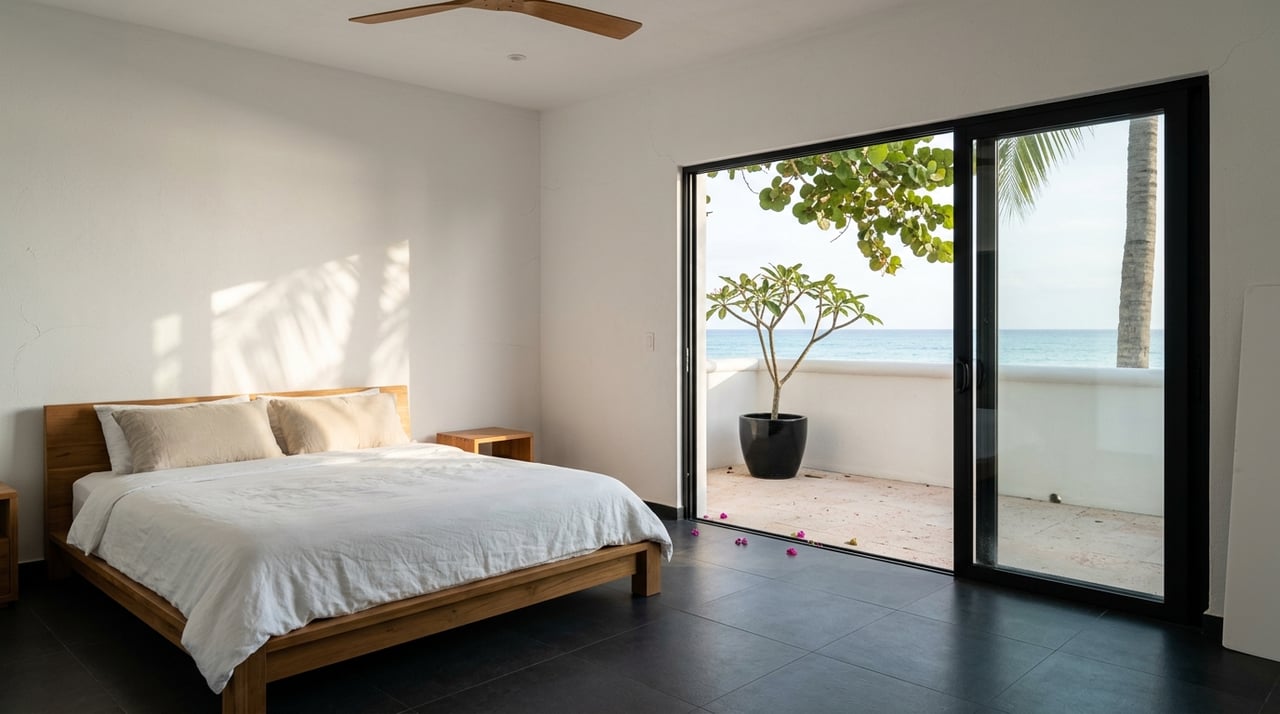
- The indoor-outdoor boundary is blurred by design: Most St. John homes connect interior spaces to the terrace through open floor plans and expansive glass openings, and furnishing both zones with visual coherence creates the best result.
The Materials That Last on St. John
The single most important furniture decision for a St. John home is material selection.
- Teak is the gold standard for any furniture exposed to the St. John climate. Its natural oils resist rot, insects, and moisture without constant treatment, and it weathers to a silvery patina if left untreated or can be maintained with oil applied every six to eight months.
- Powder-coated aluminum is the top metal choice. It is lightweight, entirely rust-resistant, and handles the salt-air environment that would destroy untreated iron or steel within a single season. Marine-grade aluminum with a quality powder-coat finish is the right specification for St. John.
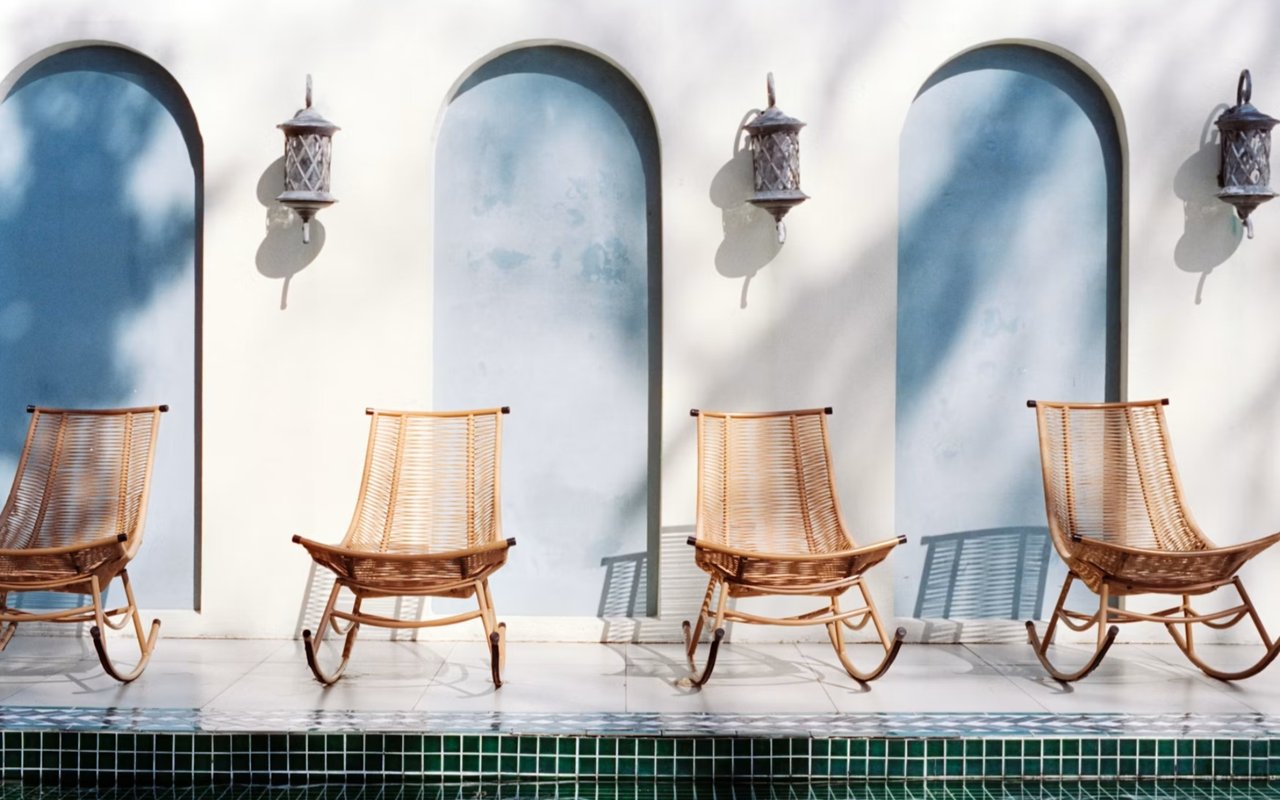
- Synthetic wicker over aluminum frames delivers the coastal aesthetic that suits St. John beautifully while outperforming natural wicker in every practical respect. High-density polyethylene resin fibers are UV-resistant, moisture-resistant, and hold their appearance far better than natural rattan over time.
The materials to avoid: untreated iron and steel, natural wicker, softwoods like pine, and furniture built primarily with adhesive joinery.
Outdoor Furniture: The Terrace as a Room
On St. John, the covered terrace or lanai is typically the most used space in the home. The view demands it, and the right furniture makes it as comfortable as any interior room.
- Build around deep seating: St. John's outdoor living is relaxed and extended. Deep, cushioned seating that invites hours of use is worth the investment, and synthetic wicker sectionals with Sunbrella fabric cushions are the combination we see in the island's most well-appointed properties.
- Choose furniture that can be secured or stored: Hurricane season runs from June through November. Lighter pieces that can be brought inside easily, or heavier teak and cast aluminum pieces that can be secured, both work depending on the storage situation.
- Think about proportion relative to the view: The terraces of St. John homes often face Coral Bay, the Sir Francis Drake Channel, or the National Park hillsides.
Furniture that sits low and keeps the sight line open serves the view rather than competing with it.
Upholstery and Fabric: Performance First
Furniture kept indoors on St. John faces elevated ambient humidity that can cause standard upholstery to develop mildew and fabric degradation.
- Performance fabrics rated for coastal conditions: Sunbrella and similar solution-dyed acrylic fabrics resist mildew, clean easily, and perform in both indoor and outdoor environments.
- Cushion construction matters: Cushions with quick-dry foam cores and drainage holes allow moisture to escape rather than accumulate. This matters even in covered outdoor spaces, where humidity alone can saturate a standard foam cushion.
- Color choices that suit the environment: Neutrals that mirror the island's tones (sandy beiges, warm whites, soft blues) wear well aesthetically and coordinate naturally with the views and materials typical of St. John properties.
Using the same fabric family across indoor and outdoor upholstery creates the visual continuity that suits the open-plan layouts common to St. John properties.
FAQs
What is the biggest furniture mistake new St. John homeowners make?
Choosing furniture based on aesthetics alone without considering material performance. Standard iron or steel-framed pieces that look handsome in a mainland showroom will begin rusting within months of salt air exposure. The commitment to coastal-rated materials has to come first, and the aesthetic choices follow from there.
Can I use indoor furniture from my mainland home on St. John?
Some pieces travel well, and others present challenges. Solid hardwood furniture with quality joinery will generally perform adequately in St. John's interior environment if the home has good ventilation. Particleboard, pressed wood, and furniture built with adhesive joinery will swell, warp, and degrade.
What is a practical starting point for applying furniture tips for St. John USVI homes on a budget?
Prioritize the outdoor pieces first, since those face the harshest conditions and fail fastest if chosen poorly. Teak and powder-coated aluminum for frames, Sunbrella for outdoor cushions, and synthetic wicker for accent seating deliver durability without requiring the highest-end price points across every category.
Contact Tropical Properties VI Today
We've helped buyers find and settle into St. John properties across every price point, and the furniture and maintenance conversations are ones we genuinely enjoy.
Reach out to us at Tropical Properties VI as your next key step toward homeownership in the USVI.
Reach out to us at Tropical Properties VI as your next key step toward homeownership in the USVI.